Conveyor Idler Bracket Spacing Design
2026-08-31 15:01:04
Conveyor Idler Bracket Spacing Design
Idler brackets provide structural support for carrying and return idlers and directly influence belt support, belt sag, load distribution, tracking stability, and conveyor service life. Proper bracket spacing should be determined according to the conveyor's operating conditions rather than using a fixed value for every application.
Factors Affecting Bracket Spacing
The main factors include belt width, belt speed, material density, conveying capacity, belt tension, belt construction, conveyor inclination, and material impact characteristics.
Heavily loaded conveyors generally require closer support to maintain stable belt geometry. Lightly loaded sections may allow greater spacing when permitted by the belt's allowable sag and structural requirements.
Carrying-Side Bracket Arrangement
Carrying idlers are commonly mounted in troughing configurations consisting of a center roller and inclined side rollers. The spacing between carrying idler brackets should provide adequate support for the loaded belt.
Loading and transfer zones normally require closer spacing because falling material creates additional impact forces. Impact idler brackets or impact beds should be designed with sufficient structural capacity for these conditions.
For long conveyor sections, the spacing should be optimized to balance belt support with the number of rotating components. Excessively close spacing increases equipment quantity, maintenance workload, and potential rolling resistance.
Return-Side Bracket Arrangement
Return idler brackets support the empty belt and therefore generally carry a lower load than carrying-side brackets. However, spacing still needs to consider belt weight, belt stiffness, belt width, speed, and allowable sag.
Special return idlers, such as rubber-disc or spiral rollers, may require specific bracket arrangements according to their structure and application.
Self-Aligning and Special Brackets
Self-aligning idler brackets should be installed at appropriate intervals to help control belt deviation. Their positioning should be determined according to conveyor length, belt tracking behavior, loading conditions, and site experience.
Special support structures may also be required around drive pulleys, loading points, transition zones, curved sections, and other areas with unusual belt forces.
Structural and Installation Considerations
Bracket spacing must be coordinated with the conveyor frame and foundation structure. Mounting dimensions, centerline accuracy, bracket rigidity, and installation tolerances should be controlled during fabrication and assembly.
Poorly aligned brackets can cause idler misalignment, increased belt resistance, uneven belt wear, and tracking problems even when the spacing itself is appropriate.
Optimization for Heavy-Duty Conveyors
For mining and other heavy-duty applications, spacing design should consider both static and dynamic loading. Finite element analysis or engineering calculations may be used to verify bracket strength and deformation in critical sections.
A practical design should avoid both excessive spacing and unnecessary over-support. The objective is to achieve reliable belt support while controlling equipment weight, cost, rolling resistance, and maintenance requirements.
Final Design Principles
Effective idler bracket spacing should provide stable belt support, controlled belt sag, uniform load distribution, reliable tracking, and sufficient structural strength. The final spacing should be verified against actual belt properties, material characteristics, conveyor capacity, and applicable design standards.
References
CEMA, Belt Conveyors for Bulk Materials.
ISO 5048, Continuous Mechanical Handling Equipment — Belt Conveyors with Carrying and Return Idlers.
ISO 1537, Continuous Mechanical Handling Equipment — Belt Conveyors with Carrying Idlers.
DIN 22107, Continuous Conveyors — Idlers for Belt Conveyors — Dimensions.
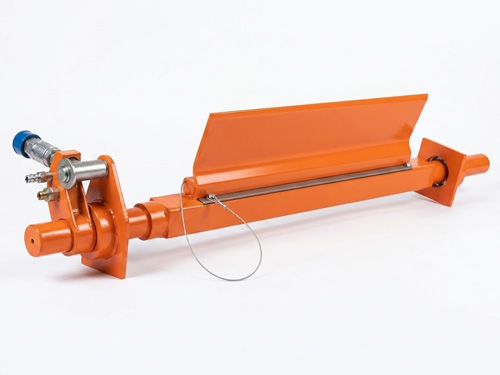
Heavy-Duty Primary Belt Cleaner Heavy-Duty Primary Belt Cleaners are robust conveyor belt c...
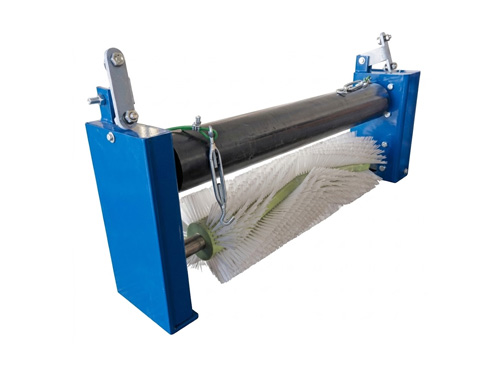
Self-Driven Rotary Brush Belt Cleaner Self-Driven Rotary Brush Belt Cleaners are specialize...
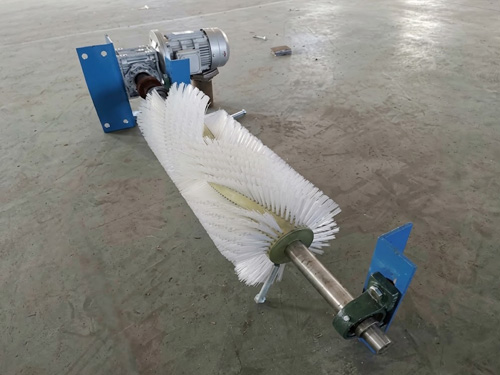
Brush Belt Cleaners in Various Models Brush Belt Cleaners are specialized conveyor belt cle...
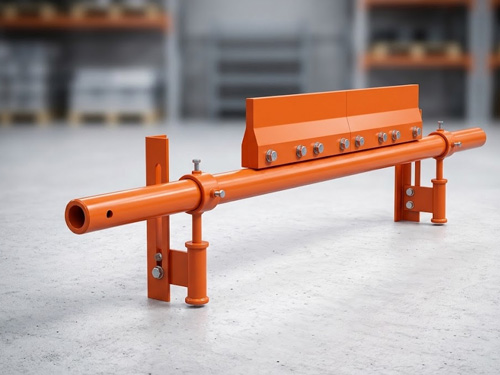
Secondary Conveyor Belt Cleaner Secondary Conveyor Belt Cleaners are designed to remove res...