Drive and Bend Pulleys: Lagging, Friction and Belt Tracking
2026-09-30 10:06:03
Idlers get most of the attention because there are so many of them, but the pulleys do the actual work. The drive pulley is where motor torque becomes belt movement, and if the friction at that interface is not sufficient, the pulley spins and the belt does not. Everything about pulley specification — diameter, face width, lagging, bearing selection — comes back to that interface and the belt tension running through it.
What the Two Types Do
Drive pulleys transmit torque. Bend pulleys redirect the belt. That sounds simple, and mechanically it is, but the loading is very different. A drive pulley sees the full belt tension on both the tight and slack sides plus the transmitted torque, and it is typically the most heavily loaded rotating component on the conveyor.
Bend pulleys carry lower tension in most layouts, but they control the wrap angle on the drive pulley and the geometry of the return path. Snub pulleys, a variation on the bend pulley, sit close to the drive specifically to increase wrap angle — more belt contact means more friction available before slip.
Why Lagging Exists
Steel on rubber gives a coefficient of friction that is simply too low, and too variable, to transmit heavy torque reliably. Wet conditions make it worse. Rubber lagging raises that coefficient substantially and, critically, makes it much less sensitive to moisture and contamination.
Lagging patterns matter. Plain rubber is the default; diamond or herringbone grooves are used where water and fines need to escape from the contact patch, since trapped water acts as a lubricant and reintroduces slip. Ceramic lagging, with ceramic tiles embedded in the rubber, is specified for high-tension applications where conventional rubber would wear quickly — the ceramic provides grip that persists even when the rubber around it has worn.
The trade-off with ceramic is cost and, occasionally, increased belt cover wear. It belongs on heavily loaded drives, not everywhere.
Diameter, Crown and Face Width
Pulley diameter is set by the belt construction. Too small a pulley over-stresses the belt carcass as it flexes around the shell, and standards such as ISO 3684 define minimum pulley diameters for a given belt. Undersizing a pulley to save space shortens belt life noticeably.
Crowning — machining the shell slightly larger at the centre than at the ends — is a traditional way of helping a belt self-centre on the pulley. It works, but it works by flexing the belt, so heavily crowned pulleys are not ideal under high tension. Alternative approaches include tapered end profiles or simply relying on correct alignment and training idlers.
Face width should exceed belt width by a margin, typically 50 to 100 mm depending on belt width, so the belt never runs on the edge of the shell.
Bearings, Shafts and the Failure Modes
Pulley failures are usually bearing or shaft failures. A drive pulley's shaft carries a large bending moment from belt tension in addition to the transmitted torque, so shaft sizing and the quality of the machining at the bearing seats and shoulders matter. Stress concentrations at a poorly radiused shoulder are a classic origin of shaft fatigue cracks.
Bearing housings need to be sealed properly and, on larger pulleys, designed for relubrication. Sealed-for-life bearings are fine on smaller pulleys; on a large drive pulley with continuous duty, the ability to regrease is worth having. Locking elements for mounting the pulley to the shaft should also be specified carefully, since a pulley that has fretted loose on its shaft destroys both parts.
Balance, Runout and Vibration
A pulley that is out of balance shakes the whole conveyor structure, and the vibration travels into the bearings on both the pulley and the drive. Large pulleys should be dynamically balanced, not just statically, because a long shell can be in static balance and still couple badly at speed.
Runout is the related check. A shell that is not concentric with the shaft makes the belt rise and fall once per revolution, which shows up as a rhythmic vibration and, over time, as fatigue in the belt. Checking total indicated runout on the finished pulley is cheap; living with it is not.
Specifying a Replacement Pulley
Replacement orders go wrong for predictable reasons: the shaft diameter at the bearing is assumed rather than measured, the keyway width differs, the face width is taken from the belt rather than the old pulley, or the lagging thickness is not accounted for in the overall diameter. A pulley built 12 mm larger in diameter because lagging was added without adjusting the shell is a pulley that changes belt speed slightly and may not clear the structure.
Send the supplier the old pulley's actual dimensions, or the drawing if one exists. A manufacturer with its own machining and lagging capability can build to a sample, and can also advise on whether the original specification was adequate for the duty — a pulley that failed early is often a pulley that was undersized in the first place.
References
Conveyor Equipment Manufacturers Association (CEMA), Belt Conveyors for Bulk Materials, 7th Edition, 2014.
ISO 3684:1990, Conveyor belts — Determination of minimum pulley diameters, International Organization for Standardization.
ISO 5048:1989, Continuous mechanical handling equipment — Belt conveyors with carrying idlers — Calculation of operating power and tensile forces, International Organization for Standardization.
DIN 22101:2011, Continuous conveyors — Belt conveyors for loose bulk materials — Basis for calculation and dimensioning, Deutsches Institut für Normung.
ASME B20.1-2021, Safety Standard for Conveyors and Related Equipment, American Society of Mechanical Engineers.
Author: Michael Trent — Technical Content Team, Conveyor Components Division
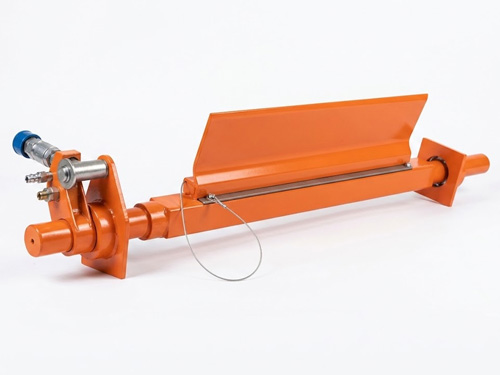
Heavy-Duty Primary Belt Cleaner Heavy-Duty Primary Belt Cleaners are robust conveyor belt c...
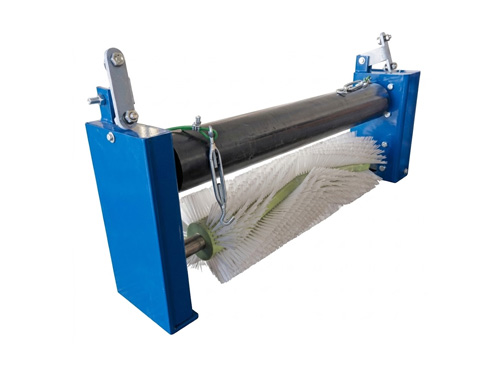
Self-Driven Rotary Brush Belt Cleaner Self-Driven Rotary Brush Belt Cleaners are specialize...
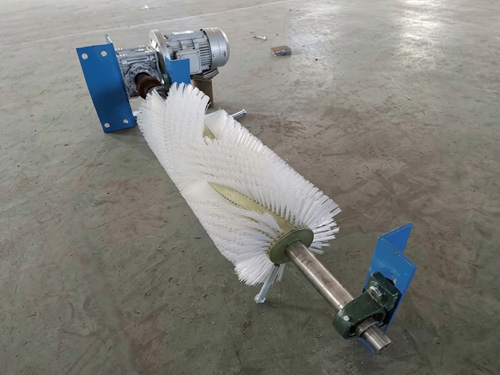
Brush Belt Cleaners in Various Models Brush Belt Cleaners are specialized conveyor belt cle...
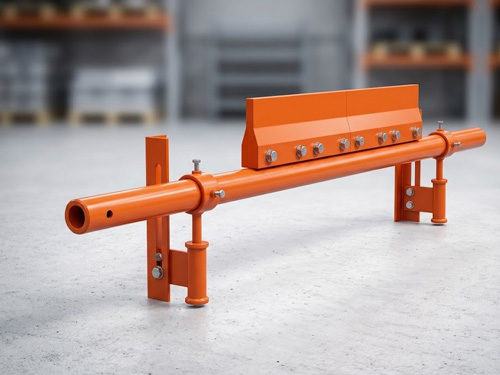
Secondary Conveyor Belt Cleaner Secondary Conveyor Belt Cleaners are designed to remove res...