Conveyor Idler Bearings and Seals: What Decides Service Life
2026-09-30 10:04:23
A conveyor roller is a simple machine — a tube, a shaft, two bearings and some grease. Almost every roller that comes out of service has failed in the bearing, and almost every bearing has failed because something got past the seal. That makes sealing the single most consequential specification on the product, and also the one that is hardest to judge from a photograph or a datasheet.
Bearing Load Is Usually Not the Problem
Idler bearings are deep-groove ball bearings in the great majority of designs, sized to the roller diameter and the expected load. Calculated bearing life on a correctly specified roller typically runs well beyond the life anyone expects from the shell. Which is why, when rollers fail at eighteen months, the cause is almost never that the bearing was too small for the load.
The exceptions are worth naming: undersized rollers on a heavily loaded slow belt, and rollers run above the speed rating for their diameter. Both are specification errors and both are avoidable if the duty is stated properly at the ordering stage.
How Contamination Gets In
There are three routes. Direct ingress of dust and water past the outer seal is the obvious one. The second is condensation: a roller that runs hot in the day and cools at night draws moist air in through the seal, and that water condenses inside the bearing. This is a real failure mode on outdoor conveyors in humid climates and it happens even with the seal intact.
The third is less discussed — contamination at assembly. Grease exposed to dust during manufacture, or a bearing pressed in with the wrong tool, will fail early regardless of how good the sealing design is. This is one of the few arguments for buying rollers from a factory with controlled assembly rather than assembled-to-order in uncontrolled conditions.
Seal Types and What They Actually Do
A labyrinth seal uses a tortuous path — a series of close-fitting grooves and flanges — to make it difficult for material to travel inward. It has no wearing contact, so it lasts indefinitely, and it is effective against coarse dust. It is less effective against fine dust and water.
A contact lip seal adds a resilient lip running against a machined surface. Better against fines and water, but it wears, and it adds a small amount of drag. Multi-stage designs combine both: outer labyrinth to keep coarse material out, grease-filled cavity behind it, contact seal innermost protecting the bearing.
That staged arrangement is the practical standard for demanding duty. When assessing a roller, ask how many sealing stages there are and whether there is a grease reservoir between them — the reservoir is what makes the difference over time, because it provides a renewable barrier rather than a single one.
Grease: Type, Quantity and the Sealed-for-Life Question
Sealed-for-life rollers are standard for good reason: on a conveyor with two thousand rollers, a lubrication round is not practical. The trade-off is that the initial grease charge has to last the life of the bearing, so both the quantity and the quality matter.
A lithium-complex or polyurea grease with good mechanical stability and water resistance is the usual choice. More significant than brand is the fill percentage — an over-filled roller churns grease and generates heat, an under-filled one runs dry. Roughly a third of the free volume is a common target.
Rollers built for regreasing are worth specifying on heavily loaded, slow-running rollers where bearing loads are highest, and on large diameter rollers where the cost of the roller justifies the maintenance.
Reading a Failed Roller
Diagnosis is straightforward once you cut one open. A bearing with dry, discoloured races and no grease means the seal failed and the grease escaped. Rust-coloured grease means water ingress, and if the rusting is uniform rather than localised, suspect condensation rather than wash-down. A shell worn through on one side with the bearing still sound means the roller stopped turning and the belt slid over it — a different problem entirely, usually a seized bearing that went unnoticed.
One seized roller on a belt is not a minor issue. The belt slides over it, the shell wears flat, and the resulting heat and friction are a genuine ignition risk in a dusty environment.
Specifying Bearings and Seals When Ordering
State the environment, not just the dimensions. Wash-down, wet tunnel, high humidity, salt-laden air, and very fine abrasive dust each point to a different sealing arrangement, and a manufacturer supplying to those conditions can match the design rather than shipping a standard roller.
Ask for the bearing size and the sealing arrangement in writing, and if the application is critical, ask for a cut-away sample. It is a cheap check and it tells you more about what you are buying than any specification sheet.
References
Conveyor Equipment Manufacturers Association (CEMA), Belt Conveyors for Bulk Materials, 7th Edition, 2014.
DIN 22107, Continuous conveyors — Idler rollers for belt conveyors — Dimensions and requirements, Deutsches Institut für Normung.
ISO 281:2007, Rolling bearings — Dynamic load ratings and rating life, International Organization for Standardization.
ISO 1537:1999, Belt conveyors — Idlers, International Organization for Standardization.
ASME B20.1-2021, Safety Standard for Conveyors and Related Equipment, American Society of Mechanical Engineers.
Author: Michael Trent — Technical Content Team, Conveyor Components Division
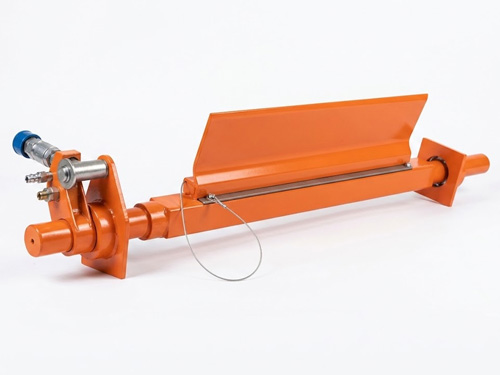
Heavy-Duty Primary Belt Cleaner Heavy-Duty Primary Belt Cleaners are robust conveyor belt c...
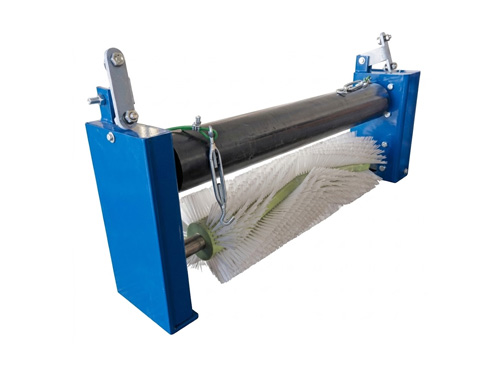
Self-Driven Rotary Brush Belt Cleaner Self-Driven Rotary Brush Belt Cleaners are specialize...
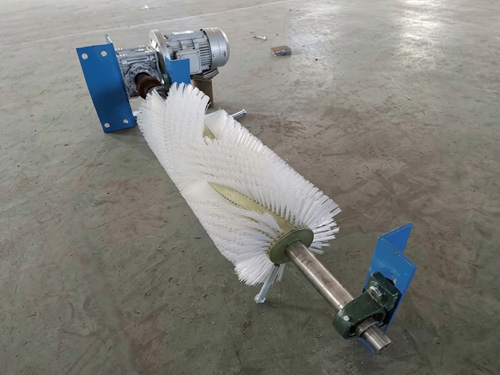
Brush Belt Cleaners in Various Models Brush Belt Cleaners are specialized conveyor belt cle...
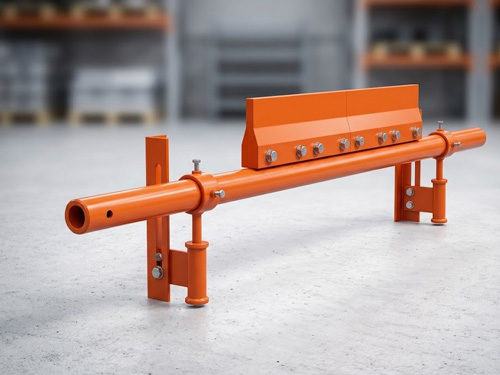
Secondary Conveyor Belt Cleaner Secondary Conveyor Belt Cleaners are designed to remove res...