Conveyor H Frames and Idler Brackets: A Selection Guide
2026-09-30 10:03:19
Brackets and frames are the least glamorous items on a conveyor and the ones that cause the most installation grief. A roller that fits the bracket is fine; a roller that is 4 mm out means someone with a grinder on a night shift. Since brackets define where every idler sits, they effectively define the belt line, and a bracket set that has bent or been fabricated out of square will produce tracking problems that no amount of roller replacement will solve.
What an H Frame Does
The H frame is the standing structure that carries the carrying-side idler set and, on many designs, the return roller beneath it. Two uprights and a cross member, bolted or welded, sitting on the conveyor's longitudinal stringers. It sets the trough geometry and the height of the belt line relative to the structure.
Because the frame takes the full load of the material passing over it, stiffness matters as much as strength. A frame that deflects under load changes the trough angle dynamically, and that changing geometry is a real contributor to belt fatigue. On high-tonnage conveyors the gauge of steel and the bracing detail are engineering decisions, not fabrication preferences.
Standard Brackets and Drop-In Slots
Individual idler brackets hold a single roller, and the industry has converged on a drop-in slot arrangement for most metric designs: the roller's shaft ends sit into open slots in the bracket and are retained by the geometry of the slot, sometimes with a locking clip. This makes roller replacement fast, which matters when a line has hundreds of them.
The dimension to check is the slot width and the shaft flat. Shaft ends are commonly machined with flats that match the slot, and the flat-to-flat dimension is what determines the fit. Two brackets that look identical can differ in slot width by a couple of millimetres, and rollers will not interchange between them.
Self-Aligning Brackets
A self-aligning bracket carries the pivoting mechanism for a training idler. The upper version mounts on the carrying side and carries the roller set on a pivot; the lower version does the same on the return run. Both are built around the same principle — the bracket must pivot freely under load while being stiff enough not to deflect.
That is a harder combination than it sounds. In a dusty, corrosive environment the pivot bushing is the wear point, and a seized pivot turns the training idler into a permanently skewed standard idler, which actively steers the belt off. When specifying these, ask how the pivot is bushed and whether it can be greased.
Offset span designs exist for conveyors where the structure limits where the pivot can sit, and these are worth knowing about on retrofit work where a standard self-aligning frame will not physically fit.
Spring Brackets for Transition and Curve Sections
Where a conveyor transitions from flat to troughed, or runs through a horizontal curve, the idler geometry changes along the run and the belt is under unusual stress. Spring brackets allow limited movement in the roller mount, absorbing some of that transition load rather than transmitting it into the belt edge.
These are specialised items and are usually specified by the conveyor designer rather than bought as spares, but they are worth knowing about because a conveyor that repeatedly damages belt edges at a transition is often a conveyor that should have had them.
Material, Finish and Corrosion
Standard frames are carbon steel, painted or hot-dip galvanised. Galvanising costs more but pays for itself outdoors, in wash-down areas, and on any conveyor handling salt, fertiliser or corrosive process material. Undersea terminals and coastal stockyards are hard environments for painted steel.
Stainless is available for food and chemical duties. The decision is usually obvious from the application — what is less obvious is whether the bolts are specified to match. Galvanised frame with plain steel bolts gives you a corroded joint at exactly the point where the load path matters.
Buying Frames and Brackets
Two approaches exist: buy to a drawing, or buy to a sample. If you have the original drawings, send them, including the steel specification and finish. If you don't — and on older conveyors this is common — a manufacturer with in-house fabrication can work from a sample bracket and dimensioned photographs.
The critical measurements are slot width, shaft centre height, bolt hole centres, and the upright spacing. Get those four right and the frame will fit. It is also worth ordering frames and rollers together from the same supplier, because the fit between them is then the supplier's responsibility rather than yours.
References
Conveyor Equipment Manufacturers Association (CEMA), Belt Conveyors for Bulk Materials, 7th Edition, 2014.
ISO 5048:1989, Continuous mechanical handling equipment — Belt conveyors with carrying idlers — Calculation of operating power and tensile forces, International Organization for Standardization.
DIN 22107, Continuous conveyors — Idler rollers for belt conveyors — Dimensions and requirements, Deutsches Institut für Normung.
ASME B20.1-2021, Safety Standard for Conveyors and Related Equipment, American Society of Mechanical Engineers.
DIN 22101:2011, Continuous conveyors — Belt conveyors for loose bulk materials — Basis for calculation and dimensioning, Deutsches Institut für Normung.
Author: Michael Trent — Technical Content Team, Conveyor Components Division
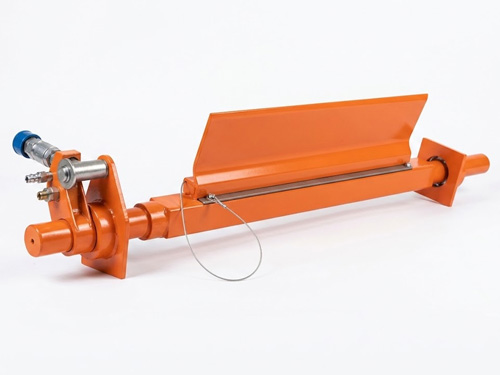
Heavy-Duty Primary Belt Cleaner Heavy-Duty Primary Belt Cleaners are robust conveyor belt c...
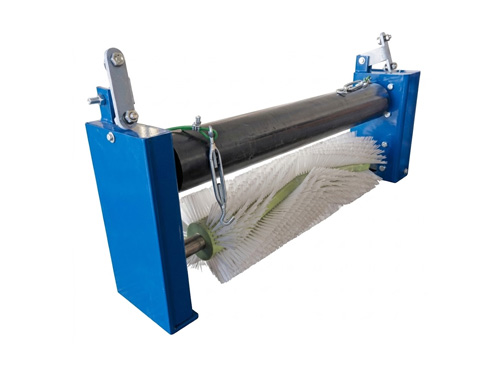
Self-Driven Rotary Brush Belt Cleaner Self-Driven Rotary Brush Belt Cleaners are specialize...
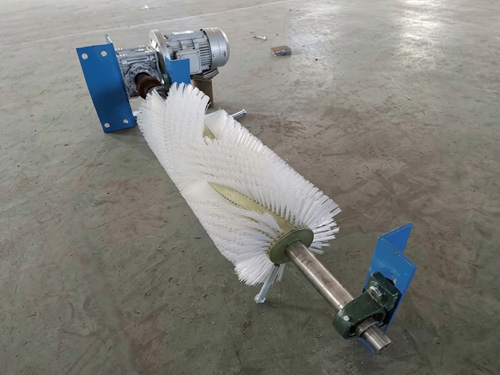
Brush Belt Cleaners in Various Models Brush Belt Cleaners are specialized conveyor belt cle...
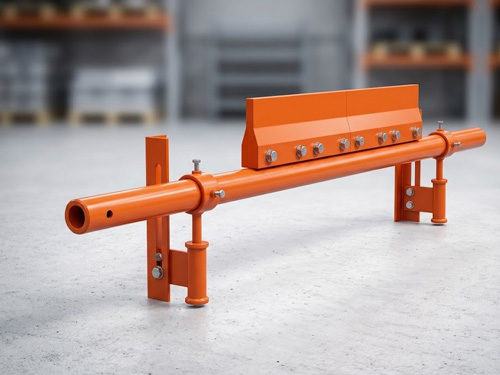
Secondary Conveyor Belt Cleaner Secondary Conveyor Belt Cleaners are designed to remove res...