Complete Conveyor Systems
Conveyor Idlers
Imperial Idler Sets
Idler Brackets
Quick-Install Idler Sets
Passive Hydraulic Self-Aligning Idlers
Conveyor Pulley
Electro-Hydraulic Plow Cleaner
Frictionless Impact Bed
Apron Belt Feeder
Impact Bed & Impact Bar
Conveyor Belt Cleaners
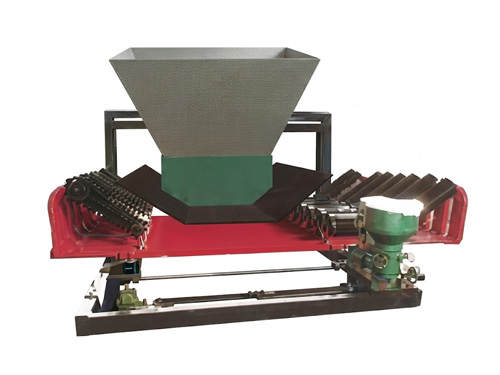
Frictionless Impact Receiving Bed 1
Frictionless Impact Receiving Bed 1
Frictionless Impact Receiving Bed 1 is a specialized conveyor belt protection device designed for material loading and transfer points where bulk materials fall onto a moving conveyor belt. Manufactured by Hebei Jingxian Huamei Mining Machinery Manufacturing Co., Ltd., it is designed to provide stable belt support while absorbing impact from falling materials and reducing damage to the conveyor belt.
Unlike conventional impact roller arrangements, the frictionless receiving bed uses a low-friction support structure combined with impact-absorbing elements. This design provides continuous support across the loading zone and helps reduce localized impact, belt deformation, and material spillage.
Continuous Belt Support at Transfer Points
When coal, ore, rock, aggregates, or other bulk materials fall from a hopper or transfer chute, concentrated impact forces can cause belt sag and localized deformation. If the belt is not adequately supported, material may escape through gaps between conventional rollers.
The frictionless impact receiving bed provides a continuous supporting surface beneath the conveyor belt, helping maintain a stable belt profile through the loading area. This improves material containment and reduces the risk of material becoming trapped between the belt and support components.
Impact Absorption and Belt Protection
The system is designed to absorb and distribute impact forces across the supporting structure. Impact-resistant support bars and elastic cushioning components help reduce the direct force transmitted to the conveyor belt and conveyor frame.
By providing distributed support rather than concentrated roller contact, the receiving bed can help protect the belt, reduce impact-related wear, and extend the service life of conveyor components.
Low-Friction Supporting Surface
A key feature of the frictionless design is the use of a low-friction sliding support surface. The conveyor belt can move smoothly over the support bars while maintaining continuous contact throughout the loading zone.
This structure helps reduce excessive belt movement and provides stable support even when large quantities of material are continuously loaded. Properly selected materials and surface design can provide a suitable balance between wear resistance, low friction, and belt protection.
Strong and Durable Construction
Huamei Frictionless Impact Receiving Bed 1 is manufactured using high-strength structural steel, wear-resistant support components, and durable impact-absorbing elements. The reinforced frame is designed to withstand heavy material loads, vibration, and repeated impact.
The support components can be designed for convenient inspection and replacement, helping simplify routine maintenance and reduce conveyor downtime.
Various Sizes and Customized Solutions
Frictionless Impact Receiving Bed 1 can be manufactured in different widths, lengths, support configurations, and mounting dimensions according to conveyor requirements.
Huamei can customize the equipment based on belt width, material characteristics, impact height, conveying capacity, belt speed, transfer chute dimensions, and installation conditions. Customized solutions can also be manufactured according to technical drawings, samples, or existing conveyor structures.
Wide Range of Applications
The frictionless impact receiving bed is suitable for coal mines, mineral processing plants, quarries, aggregate facilities, cement plants, power stations, ports, and other heavy-duty bulk material handling systems.
With continuous belt support, effective impact absorption, and a low-friction sliding structure, Huamei Frictionless Impact Receiving Bed 1 provides reliable protection for conveyor belts at demanding loading and transfer points, helping improve material containment, reduce belt wear, and maintain stable conveyor operation.
Choosing Primary and Secondary Conveyor Belt Cleaners
How to select primary, secondary and brush belt cleaners: blade materials, mounting position, belt speed and splice type, plus the mistakes that shorten blade life.
2026-09-30
Apron Belt Feeders: Feeding Heavy and Lumpy Material Under Control
ow apron belt feeders regulate heavy, abrasive and lumpy material from hoppers and stockpiles, what to check in pan, chain and drive specification, and where they are used.
2026-09-30
Common Failure Problems of Conveyor Idler Brackets
Common Failure Problems of Conveyor Idler Brackets Conveyor idler brackets are structural components that support carrying, return, impact, and self-aligning idlers. Although their construction is relatively simple, they operate under conti
2026-08-31
Conveyor Idler Bracket Spacing Design
Conveyor Idler Bracket Spacing Design Idler brackets provide structural support for carrying and return idlers and directly influence belt support, belt sag, load distribution, tracking stability, and conveyor service life . Proper bracket
2026-08-31