Key Structural Design and Safety Protection of Heavy-Duty High-Angle Belt Conveyors
2026-08-31 14:58:13
Key Structural Design and Safety Protection of Heavy-Duty High-Angle Belt Conveyors
Heavy-duty high-angle belt conveyors are designed to transport large quantities of bulk materials over significant elevation differences while maintaining stable material flow. Compared with conventional belt conveyors, their structural design requires greater attention to belt tension, material retention, drive capacity, support stability, and safety protection.
Conveyor Structure Design
The complete conveyor system normally consists of the conveyor belt, carrying and return idlers, pulleys, drive unit, tensioning device, supporting structure, loading system, discharge equipment, and safety devices.
For heavy-duty applications, the main frame should have sufficient strength and rigidity to withstand belt tension, material loads, vibration, and dynamic forces. Structural alignment is particularly important because misalignment can increase belt deviation, wear, and operating resistance.
High-Angle Conveying Considerations
As the conveyor inclination increases, the risk of material rollback and spillage becomes more significant. The conveyor angle should therefore be selected according to material properties, belt type, particle size, moisture content, and required conveying capacity.
For steeper applications, suitable belts with increased grip or specialized conveying surfaces may be considered. Loading and discharge points should also be carefully designed to maintain stable material flow.
Drive and Tensioning System
Heavy-duty high-angle conveyors require a drive system capable of providing sufficient torque under starting and full-load conditions. Motor power, gearbox capacity, drive pulley dimensions, and transmission arrangement should be determined through appropriate engineering calculations.
The tensioning system must maintain suitable belt tension during starting, stopping, and normal operation. Proper tension control helps prevent belt slipping, excessive sag, and unstable material transportation.
Idler and Pulley Configuration
Carrying idlers should provide adequate support for the loaded belt, while return idlers support the empty belt. Impact idlers or impact beds should be installed at high-impact loading points when necessary.
Self-aligning idlers can help control belt tracking. Pulley diameters, shaft strength, bearings, and lagging should be selected according to belt tension and operating conditions.
Anti-Rollback and Material Retention
For high-angle conveying, the belt system should provide reliable material retention. Depending on the application, cleated belts, corrugated sidewalls, suitable skirt systems, or other specialized belt configurations may be considered.
Transfer chutes should minimize material impact and prevent uncontrolled material flow. Proper loading alignment is essential for maintaining stable operation.
Safety Protection Configuration
A heavy-duty conveyor should incorporate appropriate emergency stop devices, pull-cord switches, belt deviation protection, speed monitoring, guards, and protective barriers.
Where rollback presents a risk, suitable anti-reverse or backstop devices should be provided according to the drive arrangement. Rotating components such as pulleys and couplings should be adequately guarded.
Inspection and Maintenance Access
The conveyor should provide safe and convenient access for inspection and maintenance. Critical components including idlers, bearings, pulleys, belt cleaners, drive units, tensioning devices, and safety switches should be accessible for routine inspection.
Final Design Considerations
The design of a heavy-duty high-angle belt conveyor should integrate capacity, inclination, belt strength, drive power, structural strength, material retention, safety protection, and maintenance requirements. Proper engineering coordination can improve conveying reliability, reduce material spillage, extend component service life, and ensure safer long-term operation.
References
CEMA, Belt Conveyors for Bulk Materials.
ISO 5048, Continuous Mechanical Handling Equipment — Belt Conveyors with Carrying and Return Idlers.
ISO 14890, Conveyor Belts — Specification for Rubber- or Plastic-Covered Conveyor Belts of Textile Construction for General Use.
DIN 22101, Continuous Conveyors — Belt Conveyors for Loose Bulk Materials — Basis for Calculation and Dimensioning.
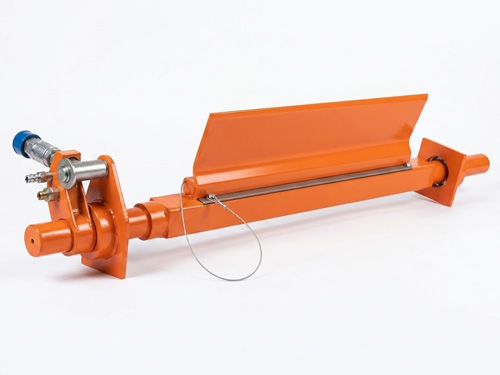
Heavy-Duty Primary Belt Cleaner Heavy-Duty Primary Belt Cleaners are robust conveyor belt c...
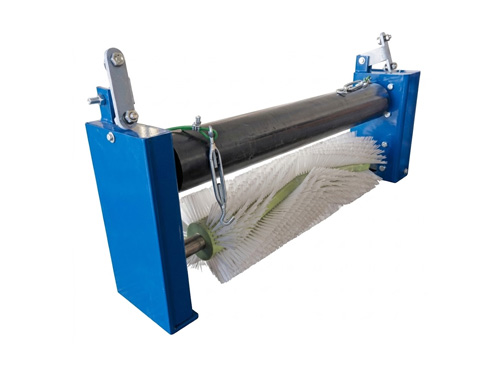
Self-Driven Rotary Brush Belt Cleaner Self-Driven Rotary Brush Belt Cleaners are specialize...
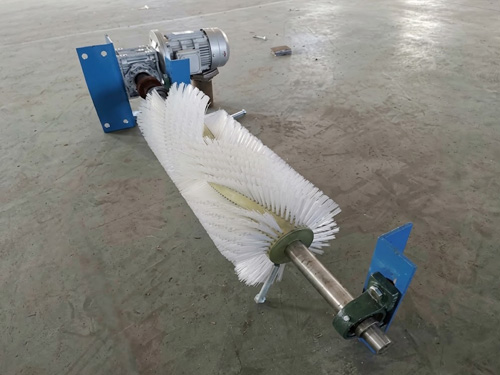
Brush Belt Cleaners in Various Models Brush Belt Cleaners are specialized conveyor belt cle...
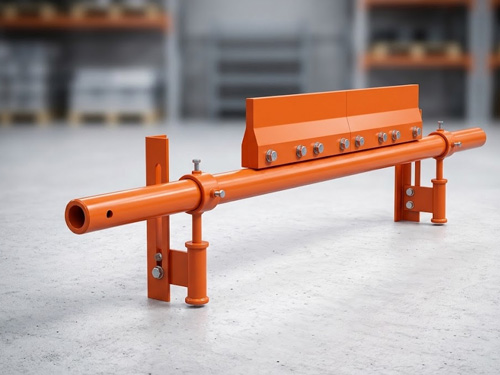
Secondary Conveyor Belt Cleaner Secondary Conveyor Belt Cleaners are designed to remove res...